This is the story of how a single tweet from February 2025 set the developer world on fire and created one of the most controversial trends in modern software development: vibe coding.
What is vibe coding?
Vibe coding is describing what you want in plain language and letting an AI generate the code that builds a website or app for you, as Andrej Karpathy put it, forgetting that the code even exists. Simon Willison draws a sharper line: if an LLM writes every line but you review, test and understand all of it, that is not vibe coding, that is just using AI as a typing assistant. The real distinction is between vibe coding, where the AI writes, you run it and ship it, and AI-assisted development, where you still understand and edit before shipping.
The origin: Andrej Karpathy's tweet
In February 2025, Andrej Karpathy, OpenAI co-founder and Tesla's former AI director, tweeted about a new kind of coding where you fully give in to the vibes, embrace exponentials, and forget the code exists, adding that he mostly just sees, says, runs and copy-pastes things, accepting all changes without reading the diffs anymore. As proof, he built MenuGen, an app that photographs restaurant menus and generates images of the dishes, despite not knowing the difference between several of the dishes himself. It took him a weekend. Merriam-Webster added vibe coding as a trending term the following month, and the rest of the tech world followed.
The most influential voices in vibe coding
- Andrej Karpathy, the godfather: a Stanford PhD and former Tesla AI director who already said in 2023 that the hottest new programming language is English, and who calls today's vibe-coded apps messy but full of promising signs.
- Simon Willison, the critical voice: an AI researcher who builds vibe-coded projects while warning against using them in production, and who proposes vibe engineering as a more responsible version where quality and security remain someone's job.
- Kevin Roose, the non-coder evangelist: a New York Times journalist with no technical background who built LunchBox Buddy, a fridge-scanning lunch app, describing this kind of tool as software for one, though one experiment did produce fake reviews on a test shop.
- Commercial pioneers: Y Combinator reported in March 2025 that a quarter of its Winter 2025 startups had codebases that were over 95% AI-generated, while Lovable.dev reached roughly $100 million in annual revenue within eight months and Replit.com grew from $10 million to $100 million in nine months after launching its AI agent.
The best-known vibe-coding tools (as of October 2025)
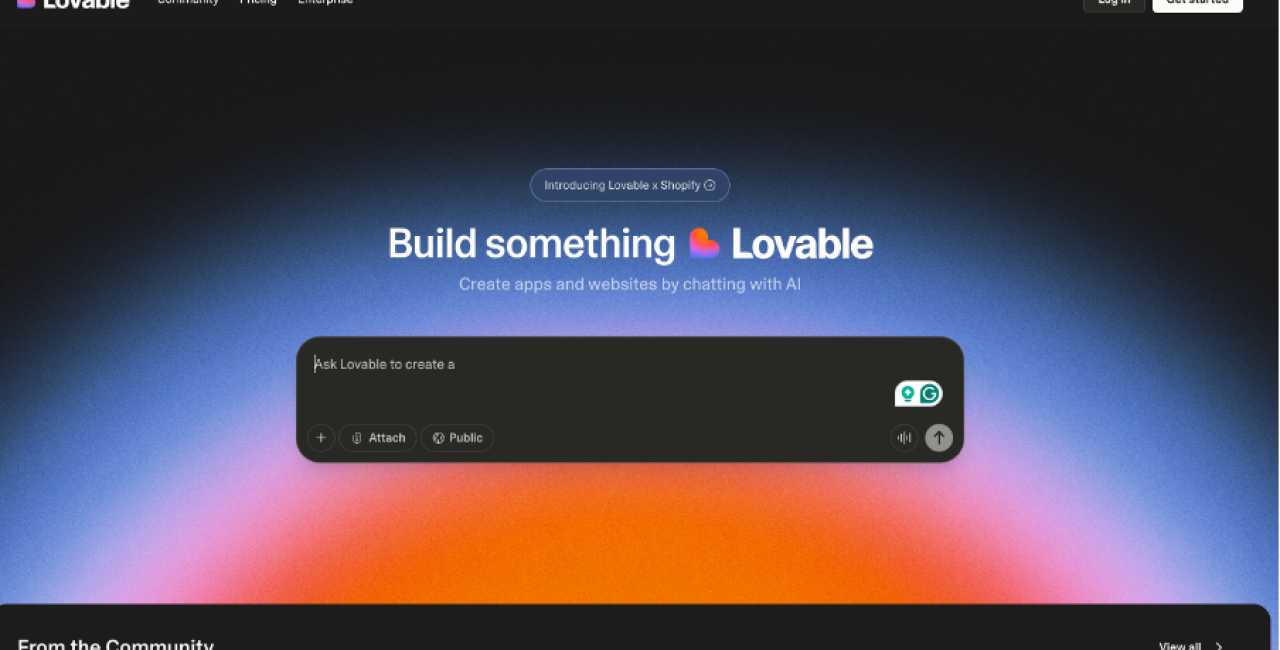
- Lovable.dev (~$25/month): builds full web apps from a single prompt with Supabase for backend, database and auth; the fastest path to a prototype but known for security issues if you are not careful.
- Replit.com (from $25/month): a browser-based, zero-setup platform, collaboration-friendly and mobile-friendly, though costs can add up during long sessions.
- GitHub Copilot Pro ($10/month): an editor-native assistant that writes code, docs and tests using your repository's context; less a vibe-builder, more a turbo for people who already think like developers.
- Cursor.com ($20/month): an AI-native IDE built on VS Code, preferred by experienced developers who want deep repo context and precise control.
- Windsurf.com ($15/month): a lighter, lower-priced alternative offering professional features.
- Bolt.new (free to $100/month): a lightweight platform for building Next.js apps directly in the browser, popular among beginners.
- v0.app (Vercel): focused on generating polished React components from text prompts, often combined with other tools for stronger front ends.
- Claude Code: a terminal-based tool strong at understanding and modifying existing codebases, with support for defining agent skills and orchestrating sub-agents.
The culture behind vibe coding
Vibe coding breaks with the classic idea that development requires full understanding of every line, echoing the early move-fast-and-break-things spirit of Web 2.0, except this time the thing being broken is the discipline itself. Development is shifting from craftsmanship to orchestration: you define the vision, and the AI does the work. Karpathy compares it to a shift from craftsmanship to concept design, where you no longer need to understand the engine to drive the car.
Why it is taking off now
- Agentic AIs: systems like Claude, GPT-5, Mistral and Gemini can hold context, navigate projects and fix their own errors, even running tests live.
- Integrated IDEs: tools like Cursor tie code, tests and documentation together in one interface.
- Democratisation of software: platforms like Lovable and Replit let non-developers build apps with no setup and no need to think about code.
Together, these mean someone with an idea and a text description can go from thought to a running web app in under an hour.
The professional controversy
The debate that splits the industry is not whether AI can write code, but whether it should. For some it is a creative free space that accelerates innovation; for others it flattens the craft and threatens code quality, security and comprehensibility. As Simon Willison puts it, most engineering work is evolving existing systems, and you cannot evolve code you do not understand.
What it means for you
For developers, it means mastering prompting, context engineering, review and debugging of AI-generated code becomes as important as writing code from scratch. For leaders, it means software production is accelerating while governance, security and compliance risk falling behind, shifting risk from the individual technician to the whole organisation.
A new paradigm
Vibe coding is an experiment, fast, imperfect and full of potential, the pioneer spirit of this era of computing. As with any gold rush, both opportunity and lawlessness follow. One thing is certain: vibe coding is here to stay, and it will mature, perhaps into vibe software engineering or something else entirely. The first rule of the new era remains simple: vibe all you want, but you are still responsible for what you build.